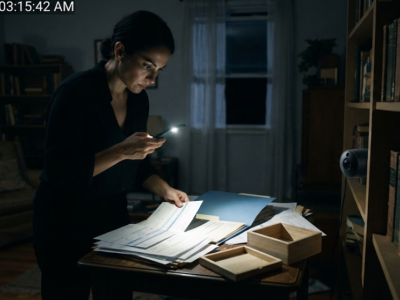
¿Cuál ha sido tu encuentro más aterrador con un desconocido? Durante mucho tiempo pensé que las personas que contaban historias de acoso, persecuciones o situaciones extrañas exageraban un poco… hasta que escuché relatos que me hicieron comprender lo fácil que puede cambiar una tarde aparentemente normal. Hoy te traigo una recopilación que me dejó sin aire. He dejado las historias completas en el enlace de los comentarios. Algunas te harán desconfiar de situaciones que antes parecían normales y otras te recordarán lo importante que es escuchar ese instinto que tantas veces intentamos ignorar. EL NOVIO DE REDES SOCIALES QUE QUERÍA ENCERRARLO Un joven conoció a alguien a través de las redes sociales. Al principio, todo parecía bonito: conversaciones interminables, confianza, cariño y esa sensación de haber encontrado a una persona que te comprende cuando estás pasando por un momento difícil. Pero poco a poco, aquella relación comenzó a convertirse en algo que nunca habría imaginado. Los comentarios sobre encerrarlo para que no se marchara, los objetos que desaparecían de su casa y las peticiones cada vez más inquietantes fueron pequeñas señales que no supo interpretar a tiempo. Cuando finalmente decidió poner distancia, descubrió que bloquear a alguien no siempre significa que esa persona vaya a desaparecer de tu vida. TENÍA 13 AÑOS Y UN HOMBRE EN MOTO LA PERSIGUIÓ Una joven, que solo tenía 13 años, regresaba a casa una tarde de invierno después de pasar unas horas con sus amigas. Apenas le quedaban un par de calles para llegar cuando un hombre en moto comenzó a mirarla de una forma que la hizo sentirse incómoda. Lo que parecía una coincidencia terminó convirtiéndose en una persecución que todavía recuerda años después. Aquel día, una decisión aparentemente insignificante le permitió ponerse a salvo. DOS AMIGAS SOLAS EN CASA Y RUIDOS EN EL GARAJE Dos amigas que creían estar solas en casa escucharon ruidos en el garaje y descubrieron que alguien llevaba horas intentando entrar. LA CHICA DE LAS REUNIONES RELIGIOSAS Una chica que acudía a reuniones religiosas empezó a recibir mensajes de un desconocido cuya obsesión se volvió cada vez más perturbadora. SOLO SALIÓ A COMPRAR MEDICAMENTOS PARA SU MADRE Y otra joven que simplemente salió a comprar medicamentos para su madre terminó siendo perseguida por un hombre que no aceptaba un no por respuesta. Lo que más me impactó de todas estas experiencias no fue únicamente el miedo, sino la manera en que cada persona tuvo que reaccionar en cuestión de segundos, sin saber qué iba a ocurrir después.
 ¿Cuál ha sido tu encuentro más aterrador con un desconocido? Durante mucho tiempo pensé que las personas que contaban historias de acoso, persecuciones o situaciones extrañas exageraban un poco… hasta que escuché relatos que me hicieron comprender lo fácil que puede cambiar una tarde aparentemente normal.
En una de estas historias, un joven conoció a alguien a través de las redes sociales. Al principio, todo parecía bonito: conversaciones interminables, confianza, cariño y esa sensación de haber encontrado a una persona que te comprende cuando estás pasando por un momento difícil. Pero poco a poco, aquella relación comenzó a convertirse en algo que nunca habría imaginado. Los comentarios sobre encerrarlo para que no se marchara, los objetos que desaparecían de su casa y las peticiones cada vez más inquietantes fueron pequeñas señales que no supo interpretar a tiempo. Cuando finalmente decidió poner distancia, descubrió que bloquear a alguien no siempre significa que esa persona vaya a desaparecer de tu vida.
Otra joven, que solo tenía trece años, regresaba a casa una tarde de invierno después de pasar unas horas con sus amigas. Apenas le quedaban un par de calles para llegar cuando un hombre en moto comenzó a mirarla de una forma que la hizo sentirse incómoda. Lo que parecía una coincidencia terminó convirtiéndose en una persecución que todavía recuerda años después. Aquel día, una decisión aparentemente insignificante le permitió ponerse a salvo.
Y lo más inquietante es que estas historias no terminan ahí. Dos amigas que creían estar solas en casa escucharon ruidos en el garaje y descubrieron que alguien llevaba horas intentando entrar. Una chica que acudía a reuniones religiosas empezó a recibir mensajes de un desconocido cuya obsesión se volvió cada vez más perturbadora. Y otra joven que simplemente salió a comprar medicamentos para su madre terminó siendo perseguida por un hombre que no aceptaba un no por respuesta.
Lo que más me impactó de todas estas experiencias no fue únicamente el miedo, sino la manera en que cada persona tuvo que reaccionar en cuestión de segundos, sin saber qué iba a ocurrir después.
He dejado las historias completas en el enlace de los comentarios. Algunas te harán desconfiar de situaciones que antes parecían normales y otras te recordarán lo importante que es escuchar ese instinto que tantas veces intentamos ignorar.
“Don’t Call Us Family Again,” Mom Texted. I Didn’t Argue. By Sunrise, Mom Was Begging Because I…
At 9:17 p.m. on Thursday, my mother sent me a text that changed the way I understood my family.
“Don’t call us family again.”
Thirty seconds later, my father added his own message.
“Never step foot in our house again.”
I was sitting at my secondhand oak desk in my two-bedroom apartment near the Tennessee River in Chattanooga. Rain tapped against the windows, and the only light in the room came from a lamp beside my laptop.
I read both messages twice.
Then I placed my phone facedown.
For five years, I had helped keep H Hallstead Architectural Millwork alive. I had paid overdue lumber invoices, covered warehouse rent, financed equipment leases, and transferred money into the company’s operating account whenever my parents said they were running out of time.
I had done it because I believed we were building something together.
Apparently, my family believed something different.
My younger brother, Trevor, was being prepared to inherit the company. My parents had announced it in front of the entire family at Thanksgiving. He was going to become managing partner, with operational control planned for the following years.
I had been sitting at the same table, knowing that hundreds of thousands of dollars I had earned were keeping that company afloat.
Nobody mentioned my contribution.
Nobody thanked me.
My mother had even leaned toward me and whispered that Trevor had the charisma to lead while I had the steady paycheck to support him.
That was when I started preparing to leave.
Three weeks before the messages arrived, I had hired an attorney and begun separating my personal finances from the company’s obligations. I had collected bank statements, old loan documents, emails, payment confirmations, and every agreement I could find.
The paperwork was spread across my desk that night.
I picked up my black rollerball pen.
Then I began signing.
I signed the notices revoking the voluntary financial support arrangements that my attorney had confirmed I could terminate. I authorized the cancellation of recurring transfers from my personal account. I sent the formal notice concerning my personal guarantee to the commercial lender, requesting that it be reviewed and that my name no longer be treated as support for future borrowing.
I did not cancel the personal line of credit I had taken out in my own name. That debt was still mine, and I intended to honor it.
I did not take company money.
I did not touch company property.
I simply stopped using my paycheck to subsidize a business I did not own.
By 10:04 p.m., the notices had been transmitted and the recurring payments had been canceled.
I closed my laptop.
For the first time in five years, I went to bed without wondering whether the company would need another emergency transfer in the morning.
I slept until my alarm.
At 6:12 a.m., my phone began vibrating.
The first message was from Trevor.
“What the hell did you do?”
Then came another.
“Dad says the bank got something from your lawyer.”
Then:
“Call me. Now.”
My mother called twice.
My father called once.
Then my mother called again.
By 7:08 a.m., I had counted seventeen missed calls and one voicemail.
I finally answered.
“Put everything back right now, Garrett,” my mother said.
There was no greeting. No question about whether I had slept. No acknowledgment of the words she had sent me the night before.
Just an order.
“Good morning, Mom.”
“Don’t play games with us.”
“What exactly do you want me to put back?”
“The bank called your father at six thirty. They received some kind of legal notice saying you’ve withdrawn your financial support. We have payments clearing today. Payroll is coming up. You need to call them and tell them this was a mistake.”
“It wasn’t a mistake.”
“You cannot do this to your own family.”
I looked at the clock.
“Last night at 9:17, you told me not to call you family again.”
There was a pause.
Then she lowered her voice.
“Garrett, this isn’t the time to be difficult.”
“I’ve been difficult for asking to see the company’s financial statements. I’ve been difficult for asking why my money is being used. I’ve been difficult for wanting to know what I’m legally responsible for. You told me I wasn’t family. I accepted that.”
My father took the phone from her.
“You have created a massive crisis,” he said. “The bank is freezing our revolving credit line pending an underwriting review. If they lock our accounts, fourteen people could lose their jobs by Monday.”
“If fourteen employees depend on my personal checking account, management needs a real budget.”
“Get down to the showroom and fix this.”
“I’m heading to a bridge inspection.”
“You can reschedule.”
“No, Dad. I can’t.”
He started shouting, but I ended the call.
I stood in my kitchen for several seconds, listening to the coffee maker finish its cycle.
Something about his reaction bothered me.
A business did not usually have its revolving credit line frozen because one family member stopped paying warehouse rent. A lender might ask questions about a guarantee, a financial commitment, or a material change in the company’s borrowing arrangements.
But my parents sounded terrified.
And I was beginning to understand that the monthly payments were only part of the story.
My name was apparently tied to something much bigger.
Five years earlier, I would never have believed that.
Back then, I was simply a thirty-three-year-old structural preservation engineer trying to build a stable life.
My work took me across eastern Tennessee, inspecting aging bridges, timber trusses, historic public buildings, and masonry structures that had survived decades of weather and neglect. I liked the work because it demanded honesty.
A cracked beam did not care who owned the building.
A weakened foundation did not become safe because the owner had a good reputation.
You examined the structure, identified the problem, and fixed what was failing.
I had always believed businesses worked the same way.
My family owned a custom architectural millwork company in Chattanooga. H Hallstead Architectural Millwork produced heartpine flooring, historical moldings, custom stair components, commercial woodwork, and restoration pieces for old homes, boutique hotels, and public buildings.
My father, Russell, had started the company decades earlier. He was a talented craftsman and an excellent salesman when he wanted to be. He understood wood, construction schedules, and the importance of a finished product that looked right.
My mother, Diane, handled the office. She managed invoices, customer calls, and the administrative work.
My younger brother Trevor was responsible for what he called brand prestige.
He was twenty-eight when the problems became serious. He had a title, a company vehicle, a generous salary, and a talent for making ordinary business activities sound like major achievements.
I worked elsewhere.
I had never expected to run the millwork company. I had my own career, my own plans, and my own savings.
Then my father called me to his house one evening and told me the company was in trouble.
He had underbid a courthouse renovation project. A supplier contract had fallen apart, lumber invoices were overdue, and the company was days away from running out of operating cash.
He sat at my kitchen table looking exhausted.
“I need eighty-five thousand dollars,” he said.
I stared at him.
“Eighty-five thousand?”
“It’s a bridge. Six months, maybe less. Once the next commercial contract closes, we’ll repay you.”
My mother sat beside him.
“This isn’t just about money,” she said. “It’s about the family legacy.”
I had been saving for a house. I had spent years living below my means, taking private consulting jobs on weekends, and avoiding unnecessary expenses.
I did not have eighty-five thousand dollars sitting around.
But I had fifty thousand in my house fund, and I could access another thirty-five thousand through a personal line of credit.
I transferred the money.
My father signed a promissory note that evening.
He never made a scheduled payment.
Six months later, the company needed another bridge.
Then another.
Within eighteen months, I was paying $3,600 a month toward the warehouse lease, $1,350 toward a heavy-duty CNC router lease, and $1,100 into the operating account on the first of each month.
The amounts changed occasionally, but the pattern never did.
Whenever the company was short, my mother called.
Whenever a supplier threatened to stop deliveries, my father called.
Whenever Trevor wanted to spend money on a new marketing initiative, someone found a way to make the cost sound necessary.
I became the person who solved the problem.
Over five years, my direct transfers and unpaid loans reached $342,800.
I knew the number exactly.
I had every transfer confirmation, every statement, and every note organized in a black binder in my closet.
My mother hated that binder.
“Real family doesn’t keep a ledger, Garrett,” she would say whenever I asked about repayment.
I never understood why the phrase applied only when I was the one owed money.
Trevor, meanwhile, seemed to live in a completely different company.
He earned $88,000 a year as director of brand and client relations. He drove a late-model luxury sedan leased through the business. He wore an expensive Swiss watch and regularly submitted steakhouse dinners as client-development expenses.
His job was mostly taking photographs of completed projects, attending chamber events, and posting polished pictures of our work online.
I wasn’t against marketing.
I was against pretending marketing was the same as financial stability.
Whenever I raised a concern, my mother accused me of being negative.
Whenever I questioned a large expense, my father said I didn’t understand how much it cost to grow a business.
And whenever Trevor missed a deadline or promised something production couldn’t deliver, I was the person asked to find a solution.
For a long time, I accepted it.
I told myself that once the company stabilized, my parents would repay the money. I told myself Trevor would eventually mature. I told myself that family businesses were messy and that everyone had to sacrifice.
I was wrong about the most important part.
My parents didn’t see my financial support as temporary.
They had begun treating it as something they were entitled to receive.
The moment I understood that was Thanksgiving.
The dining room at my parents’ house on Lookout Mountain was full of relatives. The table was made in our own shop, from lumber purchased during one of my emergency transfers.
There was turkey, pecan pie, and a fire burning in the stone fireplace.
After dessert, my father stood at the head of the table.
“I want to share some exciting news about the future of Hallstead Architectural Millwork,” he announced.
He tapped his glass with a fork.
“Over the past two years, Trevor has brought fresh energy, modern marketing, and prestige to our brand. Starting next spring, he’ll be stepping into the role of managing partner. We plan to transition full operational leadership to him over the next few years.”
The room erupted in applause.
My uncles raised their glasses.
My cousins congratulated Trevor.
He sat back, smiling, as if the company had been waiting for him to arrive.
I looked down at my coffee.
Nobody mentioned the $342,800.
Nobody mentioned the warehouse rent being paid from my checking account.
Nobody mentioned that I had personally taken on debt to keep the equipment running.
I wasn’t expecting a parade.
But I had thought someone might acknowledge what I had done.
My mother walked behind my chair carrying dessert plates. She noticed my expression and leaned down.
“Don’t make tonight about money, Garrett,” she whispered. “Trevor has the charisma to lead. You have the steady paycheck to support him.”
I looked at her.
She continued gathering plates.
I didn’t argue.
On the drive home, I thought about the years I had spent postponing my own life.
I had delayed buying a house. I had turned down trips. I had driven an old pickup with a patched driver’s seat. I had stopped spending money on hobbies because the company always seemed to need another payment.
And my family had just announced that the person receiving the benefits of my sacrifice would inherit the business.
That was the night I stopped assuming things would eventually become fair.
Three months later, I sent my parents an email.
It was polite and straightforward.
I requested the company’s profit-and-loss statements, balance sheets, current debt schedules, and a list of outstanding obligations before committing to another year of financial support.
I did not accuse anyone.
I did not demand repayment.
I simply wanted to know what I was funding.
Trevor called me that afternoon.
“Are you serious?” he asked, laughing. “You’re acting like the IRS.”
“I’m asking for the financial statements.”
“It’s a family business, Garrett.”
“It’s also a business with debts I’m helping pay.”
“You’re being dramatic.”
“I’ll wait for the documents.”
My father told me their accountant was busy with quarterly filings.
My mother said I was treating the people who raised me like strangers.
I repeated that I needed the records before agreeing to continue.
Two weeks later, an envelope arrived.
It contained incomplete bank summaries, several missing supplier invoices, and a spreadsheet titled Projected Family Capital Support.
I read it once.
Then I read it again.
One line listed me as an active financial contributor pledged to provide $5,500 per month for the next sixty months.
Another listed a contingent capital reserve of $175,000 under my name.
I had never agreed to either commitment.
I called my father.
“What’s this spreadsheet?”
“Just internal planning,” he said.
“Did you submit it to the bank?”
A pause.
Then he changed the subject.
“Are you coming over Sunday? The back porch beam is sagging.”
I recognized the move.
Whenever I asked a financial question, he tried to return me to the role of helpful son.
This time, I didn’t take the bait.
I contacted Colleen Whitaker, a commercial litigation attorney in Chattanooga who handled banking disputes and personal guarantee matters.
She listened carefully while I explained the situation.
Then she said something I would remember for the rest of my life.
“Before you stop paying a single dime, we need to understand the exact legal boundary between voluntary support and contractual liability.”
She asked me to collect everything.
Every agreement.
Every bank statement.
Every wire confirmation.
Every email.
Every document bearing my name.
For three weeks, I worked on the file after my engineering shifts.
I organized five years of financial records and sent them to Colleen.
She confirmed that I remained responsible for the personal line of credit I had opened in my own name. That debt was mine, regardless of what my parents had promised.
But the monthly warehouse rent, equipment lease payments, and operating transfers were voluntary arrangements. I was not required to continue making them simply because my parents had grown accustomed to receiving them.
The more concerning issue was the bank.
My parents had apparently represented that I would continue supporting the company financially.
Colleen explained that we needed to notify the lender of the limits of my actual commitments and request written confirmation of any guarantee or pledge the bank believed I had signed.
She drafted the necessary notices.
I had planned to meet with my parents that Friday and explain the changes.
They sent the messages on Thursday night instead.
“Don’t call us family again.”
“Never step foot in our house again.”
So I signed the paperwork.
By Friday morning, the bank had contacted my parents.
And that was when the panic began.
At 10:30 a.m., while I was inspecting an old retaining wall along the Chattanooga Riverwalk, my phone buzzed.
A former colleague had sent me a screenshot of Trevor’s social media post.
It showed him standing outside the millwork company’s entrance, looking solemnly toward the horizon.
The caption read:
“True character reveals itself when times get tough. Some blood relatives would rather watch a family legacy burn to the ground than see their younger brother succeed. Praying for our hardworking craftsmen today.”
I stared at it.
Trevor was building a public story before anyone knew what had actually happened.
He wanted people to believe I had deliberately destroyed the company because I couldn’t accept his promotion.
A local architect who had worked with me on a restoration project sent a message.
“Hey Garrett, everything okay over at your dad’s shop?”
I typed a reply, deleted it, and put my phone away.
A few minutes later, my friend Curtis Gallagher called.
Curtis had known me since our university days. He worked in commercial credit risk in Nashville and understood how lenders evaluated guarantees and business borrowing.
“Tell me you’ve seen your brother’s post,” he said.
“I have.”
“Don’t respond.”
“I wasn’t planning to.”
“Good. Let the paperwork speak. If the bank froze a revolving credit line at six thirty in the morning, your parents probably promised the lender something they believed they had from you.”
I looked out at the river.
“That’s what I’m worried about.”
“Then don’t get pulled into an online argument. Find out what they submitted.”
That afternoon, Colleen called.
“Are you somewhere private where you can open your email?”
I climbed into my truck and shut the door.
“I’m in the department parking lot.”
“I received a response from First Cumberland Bank’s legal compliance department. They acknowledged your notice, but they also attached a document they say is an active guarantee.”
“What kind of guarantee?”
“A commercial credit addendum tied to a five-hundred-thousand-dollar working capital facility.”
I opened the attachment.
It was two pages long.
The second page contained a pledge stating that I personally guaranteed capital injections of $5,500 per month for sixty months, backed by a $175,000 liquidity reserve.
At the bottom was my full legal name.
Beside it was a digital signature stamp.
The date was October 14.
The time was 2:42 p.m.
I felt my stomach tighten.
“Garrett?” Colleen asked.
“I’ve never seen this document.”
“Are you sure?”
“Absolutely.”
“Then we need evidence.”
I checked my work calendar.
On October 14, I had been in Knoxville, inspecting cracked limestone arches on the Gay Street Bridge.
I had timestamped photographs with GPS coordinates. I had a signed site safety log countersigned by two transportation inspectors. I also had a credit card receipt from a gas station along Interstate 75 later that afternoon.
My laptop had been locked in my office in Chattanooga.
I sent everything to Colleen.
She reviewed the records and called back.
“This is serious,” she said. “But we’re not going to accuse anyone of forgery until we obtain the electronic signature audit trail. We need to know how this document was created, who uploaded it, what authentication method was used, and what records the bank relied on.”
I understood.
An engineering report was not built on suspicion. It was built on evidence.
The same principle applied here.
Over the weekend, I kept quiet.
My parents continued calling.
Trevor sent messages accusing me of sabotaging the company.
My mother left two voicemails saying that I was destroying everything my father had worked for.
I didn’t respond.
On Monday morning, I arrived at my office and was told that Douglas Caldwell, our regional engineering director, wanted to see me.
Douglas had been my supervisor for seven years.
When I entered his office, he looked serious.
“Garrett, you’ve been one of our most reliable engineers,” he said. “That’s why I wanted you to hear this directly.”
He turned his speakerphone toward me.
“Your mother left this voicemail at 8:15.”
He pressed play.
My mother’s voice filled the office.
“Mr. Caldwell, I’m sorry to bother you. I’m calling out of concern for public safety. My son Garrett is going through a severe personal and financial breakdown. He’s acting erratically, cutting off family obligations, and making reckless decisions. I thought someone at his agency should know before he signs off on any major bridge or building inspections in his current state.”
I sat completely still.
My mother had contacted my employer.
She had taken a private financial dispute and tried to turn it into a question about my professional judgment.
For thirteen years, I had built my career on precision, documentation, and trust.
A structural preservation engineer couldn’t afford to have people questioning whether he was mentally capable of making safety decisions.
Douglas stopped the recording.
“What’s going on?”
I explained everything.
I told him about the voluntary financial support, the family business, the bank guarantee I had never signed, and the attorney handling the dispute.
I didn’t exaggerate.
I didn’t speculate about who had created the signature.
I showed him the documents I was authorized to share and explained that the matter was being handled through counsel.
Douglas listened without interrupting.
When I finished, he nodded.
“Your family’s dispute doesn’t erase seven years of good engineering work,” he said. “I’m documenting this in a confidential personnel file. If she contacts us again, our general counsel will handle it.”
I thanked him.
That evening, I called Colleen.
“My mother contacted my employer.”
There was a pause.
“Did she make allegations about your professional competence?”
“Yes.”
“Do you have the recording?”
“My supervisor saved it.”
“Good. Send the details to me. Don’t contact her about it.”
I looked at the ceiling.
“They’re trying to make me look unstable.”
“They’re trying to create pressure,” Colleen replied. “We need to stay focused on the bank records.”
She was right.
And the bank records were about to reveal much more than a questionable signature.
On Tuesday, Colleen received the first part of the electronic signature audit information from First Cumberland.
The bank had not yet released every record. It was conducting its own internal review. But the preliminary information showed that the document had been uploaded through the company’s business banking access.
The digital signature field had been completed using an electronic signing process.
The bank’s records did not establish that I had personally reviewed or approved the document.
There was another problem.
The supporting file contained a projected capital contribution schedule that matched the spreadsheet my parents had sent me.
The same $5,500 monthly amount.
The same $175,000 reserve.
The same sixty-month period.
Those figures had not appeared by accident.
Someone had taken an internal planning document and used it as part of a lender submission.
I called Colleen.
“Does the bank have proof I signed it?”
“Not yet. They have a document bearing your name. That’s not the same thing as proving you authorized it.”
“What happens now?”
“We request the full audit trail, the underlying submission records, and every version of the document. We also formally dispute the guarantee and demand that the bank stop treating it as an established personal obligation while the matter is investigated.”
“Can they do that?”
“They can review the dispute. Whether they can continue relying on the document depends on the contract, the applicable law, and the evidence. We’re not going to make assumptions.”
That afternoon, I received an email from my father.
It contained one sentence.
“We need to talk before this gets out of hand.”
I forwarded it to Colleen.
She advised me not to discuss the disputed guarantee directly with my parents while the bank was reviewing it.
Instead, she arranged a formal meeting with the bank’s compliance representative and the company’s outside accountant.
My father agreed to attend.
My mother agreed too.
Trevor initially refused.
Then he learned the meeting would involve the credit renewal.
He changed his mind.
The meeting took place the following Thursday in a conference room at First Cumberland’s Chattanooga office.
My attorney sat beside me.
Across the table were my parents, Trevor, the bank’s compliance officer, and the company’s outside accountant.
The compliance officer began by explaining that the bank had received a dispute concerning the guarantee attributed to me.
She emphasized that the bank was not making a final finding at that meeting.
Its purpose was to establish what had been submitted, what supporting records existed, and what steps were necessary to resolve the disputed obligation.
Colleen placed a copy of my October 14 inspection schedule on the table.
“This is where Mr. Holstead was at the time the document was electronically signed,” she said.
She showed the photographs, the location information, and the site safety log.
Then she placed the bank’s document beside them.
“The client disputes signing this agreement. We are requesting the complete audit trail and all records associated with its creation and submission.”
The compliance officer nodded.
“We have received the request.”
My father shifted in his chair.
“Can we please keep this professional? The company needs the credit line. We have employees depending on it.”
Colleen remained calm.
“Professional treatment of the issue is exactly what we’re requesting. The bank needs to know whether the guarantee is valid.”
My mother looked at me.
“Garrett, why are you doing this?”
I stared at her.
“I’m asking the bank to verify a signature I didn’t make.”
“You know your father would never intentionally hurt you.”
“Then this should be easy to explain.”
Trevor leaned forward.
“You’re turning an internal business document into a criminal accusation.”
“I haven’t accused anyone of anything,” I replied. “I’ve disputed a document with my name on it.”
My father interrupted.
“We were trying to secure financing. The company needed to show the bank that it had dependable capital support.”
“Then you should have asked me.”
“We thought you were committed to helping.”
“I was helping. I was transferring money every month. That doesn’t mean you could promise the bank another sixty months of payments I never agreed to make.”
My mother folded her arms.
“You knew the business needed support.”
“I knew it needed support. I didn’t agree to guarantee half a million dollars in borrowing.”
The compliance officer asked a question.
“Mr. Russell Holstead, do you know who prepared the capital contribution schedule?”
My father looked at the table.
“Diane handled most of the paperwork.”
My mother immediately turned toward him.
“Russell, you approved the renewal.”
“I approved the application.”
“You told me the bank needed the numbers.”
Trevor shifted.
“Can we not do this here?”
The room became quiet.
Colleen looked at the compliance officer.
“We would like the bank to preserve all communications and access records relating to the submission.”
The officer nodded.
“We will.”
The meeting ended without a final decision.
But something had changed.
My parents could no longer treat the guarantee as a private family misunderstanding.
It was now a formal disputed document under review.
The following Monday, Colleen received another update.
The bank’s preliminary audit showed that the disputed document had been uploaded through the company’s administrative banking account. The account had been accessed from the millwork office on October 14.
That alone did not identify who had physically used the computer.
But the submission records contained a user identifier associated with the company’s administrative credentials.
The bank also confirmed that the electronic signing process had not included a completed verification step directly attributable to me.
There was no authenticated confirmation showing that I had personally reviewed the guarantee.
Colleen called me.
“That’s important,” she said. “It doesn’t tell us everything, but it supports your dispute.”
“Can the bank remove the guarantee?”
“They can decline to rely on it if they determine it was not properly authorized. They may also require the company to restructure the credit facility.”
I sat at my desk, looking at the inspection photographs from Knoxville.
For weeks, I had wondered whether my parents had simply become careless with my money.
Now I knew the problem was much deeper.
They had treated my future income as an asset they could promise to someone else.
And they had done it without asking.
The next surprise came from Denise, the company’s controller.
She contacted Colleen after discovering that several records were missing from the packet my parents had initially provided.
One of the missing items was a consulting invoice submitted by Apex Bridge Consulting.
The company belonged to Trevor.
It had billed H Hallstead Architectural Millwork for market research and procurement strategy.
The amount was $18,000.
The invoice had no detailed breakdown of hours, no supporting research report, and no clear description of the work completed.
Denise had held the payment because the documentation was incomplete.
The invoice was not proof of wrongdoing by itself. A company could legitimately hire an outside consultant owned by an employee or family member if the arrangement was disclosed, approved, and properly documented.
But the lack of supporting records raised questions.
The accountant requested the underlying contract, deliverables, approval records, and payment history.
Trevor was furious.
He called me that evening.
“You’re trying to destroy me.”
“I’m not reviewing your company, Trevor. The accountant is.”
“You know what Apex Bridge does.”
“Then show the accountant the work.”
“You’ve always hated that I have something of my own.”
“I don’t care whether you own a consulting company. I care whether our family business is paying for services it actually received.”
“You’re acting like a prosecutor.”
“I’m asking for an invoice to be supported by the work.”
He laughed.
“Dad knows what I do.”
“Then he can provide the approval records.”
Trevor went quiet.
Then he said, “You think you’re going to get the company.”
I leaned back.
“I don’t want the company.”
“Sure.”
“I wanted my money back. I wanted honest records. I wanted you to stop treating the business like your personal credit card.”
He hung up.
The accountant’s review continued for several weeks.
It found that the $18,000 consulting invoice lacked adequate supporting documentation. The company did not release the payment while the review was pending.
The accountant also identified weaknesses in the company’s financial controls.
The same person could prepare vendor expenses, request payment, and obtain informal approval without a consistent independent review.
The company had relied too heavily on trust and too little on documentation.
That was not a criminal finding.
It was a serious management failure.
The bank’s review reached a conclusion a few weeks later.
It could not verify that I had personally authorized the disputed guarantee. The bank agreed to remove the disputed personal support pledge from the company’s credit file while the matter was resolved.
The company would need to provide a revised borrowing structure and additional financial documentation before the full revolving credit renewal could proceed.
The bank also required the company to correct its financial projections.
The $5,500 monthly contribution could no longer be presented as guaranteed capital from me.
The $175,000 reserve could no longer be listed as available personal liquidity.
My father called me after receiving the notice.
His voice was quieter than it had been in weeks.
“They’re making us restructure the facility.”
“I know.”
“We may have to reduce expenses.”
“Then reduce expenses.”
“That’s easy for you to say.”
I looked at the documents on my desk.
“No, Dad. It wasn’t easy for me to spend five years covering them.”
He sighed.
“We’ve got people working here.”
“So do other businesses. That doesn’t mean the owner gets to promise money that doesn’t belong to him.”
He didn’t respond.
Then he asked the question I had been waiting for.
“Did you know this was going to happen?”
“No.”
“You must have known the bank would freeze the line.”
“I knew the bank needed to review my actual obligations. I didn’t know what you had submitted.”
“You could have warned us.”
I almost laughed.
“I asked you for the financial statements three months ago. You called me dramatic. I asked whether my name had been submitted to the bank. You changed the subject. I gave you every opportunity to explain this before I involved an attorney.”
He went silent.
“I didn’t create this situation,” I said. “I stopped pretending it wasn’t happening.”
That was the end of the call.
The company had to make changes.
The luxury vehicle lease was terminated when it became clear that the expense could not be justified under the revised budget. Several discretionary marketing expenses were suspended. The company renegotiated its equipment obligations and reviewed the warehouse lease.
The accountant helped establish a realistic cash-flow plan.
The company did not collapse overnight.
The fourteen employees did not all lose their jobs.
But the days of assuming that I would quietly cover every shortfall were over.
Trevor’s role changed too.
He remained involved in business development, but he no longer had unrestricted authority over expenses or vendor arrangements. Any related-party consulting agreement required formal disclosure, independent review, and documented deliverables.
He complained that the new rules made it impossible to move quickly.
The accountant told him the rules made it possible to know where the money was going.
For the first time, Trevor had to justify his spending like everyone else.
My mother did not accept the changes easily.
She called me repeatedly.
Sometimes she cried.
Sometimes she accused me of humiliating the family.
Sometimes she said I was letting strangers make decisions about a company my grandfather had helped build.
I listened.
But I didn’t reverse my decision.
One afternoon, she left a voicemail.
“Garrett, please. Your father isn’t sleeping. The bank is asking questions every day. Trevor is furious. We need you to come home and help us fix this.”
I replayed the message once.
Then I sent it to Colleen.
She advised me to keep communication limited to necessary legal and financial matters.
I followed her advice.
The next message from my mother was different.
“Can we please have dinner? Just the family. No lawyers. No accountants. We need to talk.”
I didn’t answer immediately.
For years, dinner had been where my parents reminded me that I owed the family loyalty.
At Thanksgiving, they had announced Trevor’s future while ignoring the money I had contributed.
Now they wanted a private conversation because the bank had stopped accepting promises made in my name.
I wasn’t ready to pretend those were the same thing.
A month later, my father requested a meeting through Colleen.
He wanted to discuss repayment of the original $85,000 loan and the other documented transfers.
We agreed to meet at her office.
My father arrived alone.
He looked older than I remembered.
He sat across from me and placed a folder on the table.
“I’ve been reviewing the records,” he said.
I waited.
“I didn’t realize the total was that high.”
I looked at him.
“You signed the original note.”
“I know.”
“You knew I was paying the warehouse rent.”
“Yes.”
“You knew I was paying the equipment lease.”
“Yes.”
“Then what did you think the total was?”
He looked down.
“I thought we’d paid some of it back.”
“You didn’t.”
He rubbed his forehead.
“I should have kept better records.”
“That isn’t the same as not knowing.”
He nodded slowly.
For once, he didn’t argue.
He opened the folder and showed me a proposed repayment schedule.
The company couldn’t repay everything immediately. Its cash flow was too tight, and the bank required it to prioritize operating obligations.
But my father proposed a fixed monthly repayment amount tied to the company’s available cash, with a written acknowledgment of the outstanding balance.
Colleen reviewed the proposal.
We changed several terms, clarified the obligations, and required the company to provide quarterly financial statements.
I didn’t accept every condition my father suggested.
I also didn’t demand that the business close.
My goal was not revenge.
It was to stop being treated as an unlimited source of money.
We signed a repayment agreement.
The first payment arrived the following month.
It was smaller than what I had lost in one year of supporting the company, but it was the first actual payment my father had made toward the original loan.
I looked at the confirmation for a long time.
It wasn’t enough to make me trust him again.
But it was a start.
The most difficult conversation came later.
My mother asked to meet me without Trevor.
We met at a quiet restaurant near the riverfront.
She arrived early and had already ordered coffee.
For a while, we talked about ordinary things. My work. The weather. A cousin who had recently gotten married.
Then she placed her cup down.
“Your father says you’re getting payments now.”
“Yes.”
“I’m glad.”
I waited.
She looked at her hands.
“I didn’t think you would really stop helping us.”
That sentence told me more than any apology could have.
“You thought I would keep paying no matter what?”
“You were always the dependable one.”
“Mom, dependable doesn’t mean unlimited.”
She nodded, but her eyes filled.
“We were under a lot of pressure.”
“So was I.”
“I know.”
“No, I don’t think you do. I was paying thousands every month while trying to save for my own house. I was taking weekend jobs because I didn’t want to fall behind. I was carrying debt that started because Dad said the company needed six months of help.”
She wiped her eyes.
“We thought you understood.”
“I understood that the company was struggling. I didn’t understand that you thought I had no right to ask questions.”
She looked away.
“I shouldn’t have sent that text.”
I waited.
“Your father shouldn’t have sent his either,” she added.
I took a breath.
“Do you remember what you said to me at Thanksgiving?”
She looked up.
“About Trevor having the charisma to lead?”
She nodded.
“You said I had the steady paycheck to support him.”
“I was trying to explain that you were both important.”
“No. You were explaining why I should keep paying while he inherited the business.”
She didn’t answer.
For a moment, I thought she might deny it.
Instead, she said, “I can see how it sounded.”
I shook my head.
“It didn’t just sound a certain way. That’s what happened.”
She began crying.
I didn’t reach across the table to comfort her immediately.
I loved my mother. That had never been the question.
But love did not require me to erase what had happened.
“I want us to have a relationship,” I said. “But I can’t go back to being the person who pays for everything and gets told he’s selfish when he asks where the money went.”
She nodded.
“I understand.”
“Do you?”
She looked at me.
“I think I’m beginning to.”
We finished our coffee.
There was no dramatic reconciliation. No promise that everything would return to normal.
I drove home alone.
And for the first time, I felt that might be exactly what I needed.
Several months later, the company was operating under a different structure.
The bank had approved a revised credit arrangement after reviewing the updated financial projections and removing the disputed personal support pledge.
The accountant remained involved.
The company established clearer approval limits and separated personal expenses from business expenses.
The fourteen employees kept their jobs.
My father continued running the company, although he had less freedom to make decisions without documentation.
Trevor remained in business development, but his authority was narrower.
He and I were not close.
We exchanged brief messages on birthdays and holidays. Occasionally, he would ask a question about a structural issue at the shop, and I would answer if it was something I could safely advise on.
But I no longer fixed his financial problems.
I no longer covered his expenses.
And I no longer accepted a family emergency as an automatic reason to transfer money.
My own life began moving again.
I increased my savings contributions.
I replaced the patched driver’s seat in my old pickup.
I started looking at houses, something I had postponed for years because I always believed the next company crisis would need my money.
I also started taking weekends off.
One Saturday, I went fishing with two friends at Chickamauga Lake.
For the first time in years, I didn’t spend the morning checking my bank account or wondering whether my mother had called.
I sat on the water, listened to the wind move through the trees, and realized how much of my life I had spent waiting for my family to stop needing me.
They never had.
I had simply needed to stop confusing their dependence with my responsibility.
About eight months after the original messages, my father called.
He asked if I would come by the shop.
I agreed to meet him during business hours.
When I arrived, he was standing near the front office, looking at a set of drawings for a restoration project.
“It’s a courthouse job,” he said. “A smaller one this time.”
I looked at the plans.
“Looks interesting.”
“We’re being more careful with the bid.”
“Good.”
He hesitated.
“I wanted to tell you something.”
I waited.
“I was wrong to assume you’d keep paying without having a say in anything.”
It wasn’t the apology I had imagined when I was younger.
But it was an apology.
He continued.
“I thought I was protecting the company. I didn’t realize how much I was asking you to carry.”
I looked at him.
“You knew how much I was paying.”
“I did.”
“Then you knew.”
He nodded.
“Yes. I knew.”
That admission mattered more than the excuses he could have offered.
He told me the repayment plan was still on schedule. He showed me the latest financial statements. He had brought the records himself rather than waiting for me to demand them.
I reviewed them.
There were still problems, but they were visible now.
The company was no longer pretending that projected money was guaranteed money.
Before I left, my father asked whether I would consider attending the next family dinner.
I told him I would think about it.
I didn’t promise.
A week later, my mother sent a message.
“Would you come for Thanksgiving this year? We would like to have you there.”
I read it several times.
Then I replied:
“I’ll come if we’re all prepared to treat each other honestly. I won’t discuss money at the table, and I won’t agree to any financial commitments there.”
She answered:
“That’s fair.”
That Thanksgiving was quieter than the one before.
Trevor was there.
He didn’t make a speech about the company’s future. My father didn’t announce an inheritance plan. My mother didn’t whisper about my paycheck.
We ate dinner.
We talked about ordinary things.
At one point, my uncle asked how the millwork company was doing.
My father answered.
“We’re getting back on stable ground. We’ve made some changes to how we manage the finances.”
He glanced at me.
“And Garrett helped make sure we dealt with the problems properly.”
It wasn’t a grand public acknowledgment.
But it was the first time he had recognized my contribution without turning it into an obligation.
After dinner, my mother walked me to the door.
She hugged me.
“I’m glad you came.”
“I’m glad things are improving.”
She hesitated.
“Do you think we’ll ever get back to how things were?”
I looked at her.
“No.”
Her face fell slightly.
“But that doesn’t mean we can’t have something better.”
She nodded.
I drove back to my apartment through the familiar Chattanooga streets.
The next morning, I opened the black binder one last time.
I checked that the original promissory note, transfer records, and repayment agreement were all in order. Then I placed the new bank correspondence behind the old documents.
I didn’t need to look at the numbers every day anymore.
The records were there if I needed them.
But I no longer lived by them.
I had spent five years believing that keeping my family together meant making sure the company never ran out of money.
I had believed that saying no would make me a bad son.
I had believed that if I stayed patient long enough, my parents would eventually recognize what I had sacrificed.
Instead, the moment I asked for transparency, they told me not to call them family.
And when I accepted their words, they discovered that the business had been relying on more than they had admitted.
They had relied on my savings.
They had relied on my credit.
They had relied on my silence.
Most importantly, they had relied on the assumption that I would never walk away.
The bank dispute forced them to confront the difference between money they had received and money they had merely promised in my name. The accounting review forced them to document expenses they had previously handled informally. And the repayment agreement forced my father to acknowledge a debt he had avoided for years.
I didn’t destroy H Hallstead Architectural Millwork.
I stopped pretending I owned its problems.
I didn’t take away fourteen employees’ livelihoods.
I stopped allowing my personal finances to be treated as the company’s emergency reserve.
And I didn’t end my relationship with my parents.
I ended the arrangement in which love was measured by how much money I was willing to lose.
Sometimes I still think about those two messages.
“Don’t call us family again.”
“Never step foot in our house again.”
For years, I would have done almost anything to make those words disappear.
That Thursday night, I finally understood that I didn’t have to beg someone to let me belong.
By sunrise, my mother was begging me to reverse the financial decisions I had made.
I didn’t.
I kept the obligations that were legally mine. I honored the repayment agreement. I left the company with a chance to rebuild itself honestly.
But I never again agreed to be its invisible safety net.
Because family should not require one person to sacrifice their future while everyone else gets to plan theirs.
And a business built on someone’s unspoken financial sacrifice isn’t stable.
It’s simply waiting for the day that person finally says no.