
In Spain’s ever-intense media and political landscape, moments of sudden revelation—whether substantiated or speculative—can ripple through institutions, dominate headlines, and redefine public discourse overnight. This week, such a moment emerged when Javier García Isac Castillón, widely known simply as Castillón, “dropped the bomb” that has reportedly sent shockwaves through circles connected to Begoña Gómez and Pedro Sánchez.
While the phrase “suelta la bomba” is often used in Spanish media to signal a dramatic revelation, the implications in this case extend beyond mere sensationalism. The claims—circulating across television, digital outlets, and social platforms—have triggered a wave of speculation, political commentary, and renewed scrutiny of public figures whose lives straddle both institutional authority and private identity.
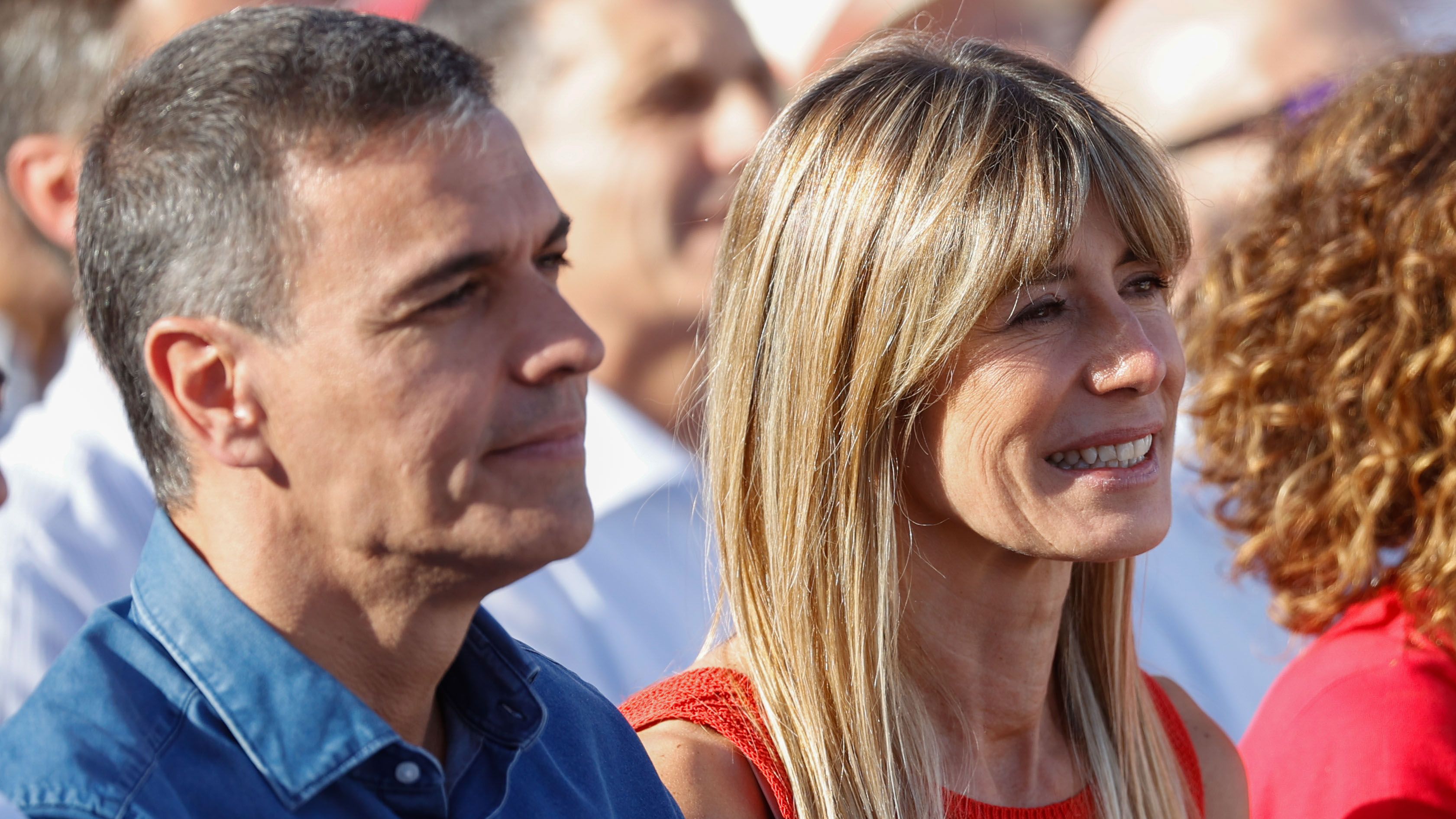
The Moment That Sparked It All
The controversy began during a broadcast segment in which Castillón presented what he framed as new and consequential information. Delivered with characteristic уверенность and a tone calibrated to command attention, his statements were immediately seized upon by audiences eager for clarity—or confirmation—regarding ongoing narratives involving Spain’s political elite.
Although the precise details of the “bombshell” remain subject to interpretation, its framing was unmistakable: this was not a routine commentary, but a claim positioned as potentially transformative.
In the current media environment, such framing is powerful. It invites rapid dissemination, encourages polarized reactions, and places immediate pressure on those named to respond—or risk allowing the narrative to take on a life of its own.
Begoña Gómez: Between Public Role and Private Scrutiny
For Begoña Gómez, the situation underscores the complexities of occupying a semi-public role.
As the spouse of the Prime Minister, she exists in a space that is neither fully private nor entirely political. Her professional activities and public appearances are often examined through a dual lens: one that considers her individual identity and another that situates her within the broader context of her husband’s leadership.
Castillón’s remarks have intensified this scrutiny.
Even in the absence of confirmed details, the mere association with a high-profile claim can influence public perception. In an age where narratives often precede verification, the challenge lies in managing both the substance of the allegation and the perception it creates.

Pedro Sánchez: Political Leadership Under Pressure
For Pedro Sánchez, the stakes are inherently higher.
As the head of government, any controversy linked—directly or indirectly—to his immediate circle carries potential political consequences. Opposition figures, media commentators, and the public alike are quick to assess whether such developments reflect broader issues of governance, transparency, or accountability.
Historically, Sánchez has demonstrated an ability to navigate crises with a combination of strategic communication and institutional control. However, the unpredictability of media-driven narratives presents a unique challenge.
The speed at which information spreads today leaves little room for delayed responses. Silence can be interpreted as caution—or as vulnerability.
The Role of Media Amplification
One of the defining features of this episode is the speed and scale of its amplification.
Within hours of Castillón’s statements, clips and summaries began circulating across social media platforms. Commentary ranged from cautious skepticism to emphatic endorsement, reflecting the deeply polarized nature of contemporary media consumption.
This amplification process is not neutral.
Algorithms prioritize engagement, often elevating content that provokes strong emotional reactions. As a result, claims framed as “explosive” or “game-changing” are particularly likely to gain traction, regardless of their evidentiary basis.
In this context, the responsibility of journalists becomes even more pronounced. The line between reporting and amplification can blur, especially when competition for attention is intense.
Journalism or Spectacle?
The episode raises important questions about the evolving nature of journalism.
Castillón’s approach—direct, assertive, and designed to capture attention—reflects a broader trend in which traditional reporting is increasingly intertwined with performative elements. This style can be effective in engaging audiences, but it also carries risks.
When claims are presented with dramatic framing, the emphasis can shift from verification to impact. The audience is encouraged to react immediately, often before all relevant information is available.
Critics argue that this dynamic undermines the اصول of journalism, which prioritize accuracy, context, and accountability. Supporters, however, contend that it reflects the realities of a media landscape in which attention is a scarce resource.
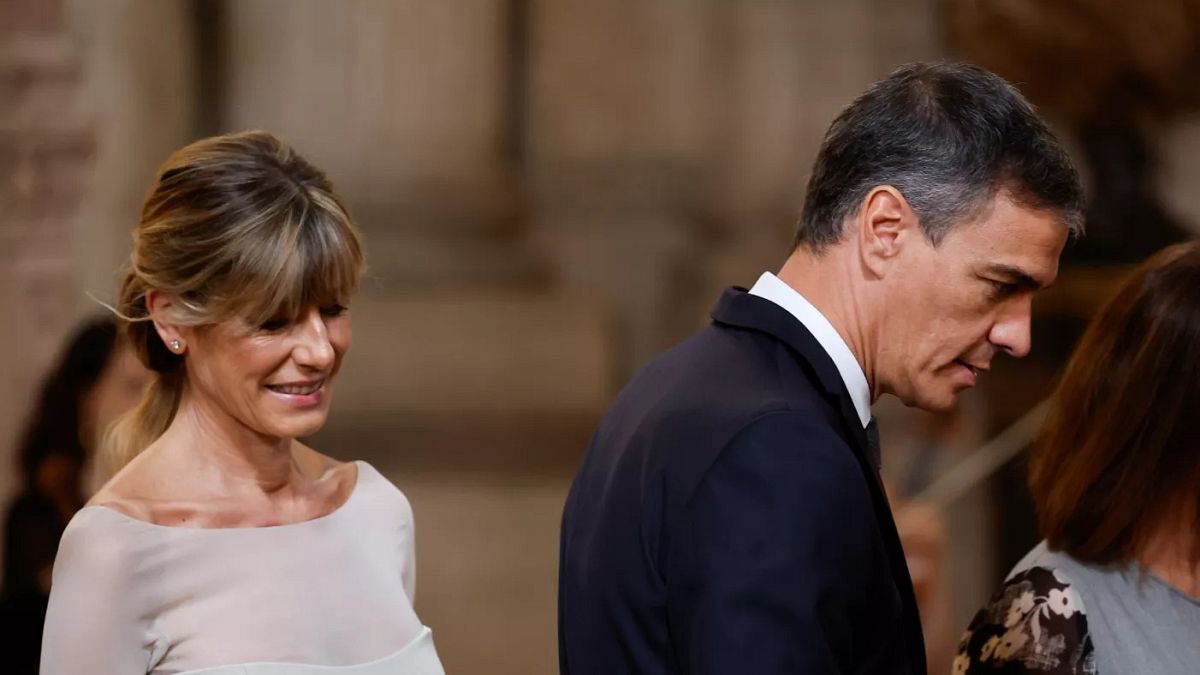
Political Implications and Strategic Responses
For political actors, moments like this require careful calibration.
An immediate denial may project confidence but risks appearing defensive if new information emerges. A delayed response allows for verification but can create a vacuum in which speculation flourishes.
In the case of Pedro Sánchez and Begoña Gómez, the response strategy will likely involve multiple layers: legal consultation, media management, and political positioning.
Opposition parties may seize upon the situation to question transparency or leadership, while supporters may emphasize the need for evidence and due process.
The outcome of this interplay will depend not only on the substance of the claims but on how effectively each side communicates its narrative.
Public Trust in the Balance
At a deeper level, the controversy touches on the issue of public trust.
In recent years, confidence in both media and political institutions has been challenged by a سلسلة of high-profile disputes and conflicting narratives. Episodes like this can either reinforce skepticism or, if handled transparently, contribute to rebuilding trust.
For the public, the key question is not merely whether the claims are true, but how they are addressed.
Are they investigated thoroughly? Are responses clear and consistent? Are corrections made when necessary?
The answers to these questions shape not only the outcome of individual controversies but the broader relationship between citizens, media, and government.
The Human Factor
Amid the analysis of strategy and impact, it is important to recognize the human dimension of the story.
For Begoña Gómez, the experience of being thrust into the center of a media storm is likely both professionally and personally challenging. For Pedro Sánchez, the need to balance political responsibilities with personal considerations adds another layer of complexity.
Even for Castillón, the decision to present such claims carries consequences. Journalistic credibility is built over time but can be affected by a single high-profile controversy.
These human elements often remain in the background, overshadowed by the immediacy of headlines and the intensity of public debate.
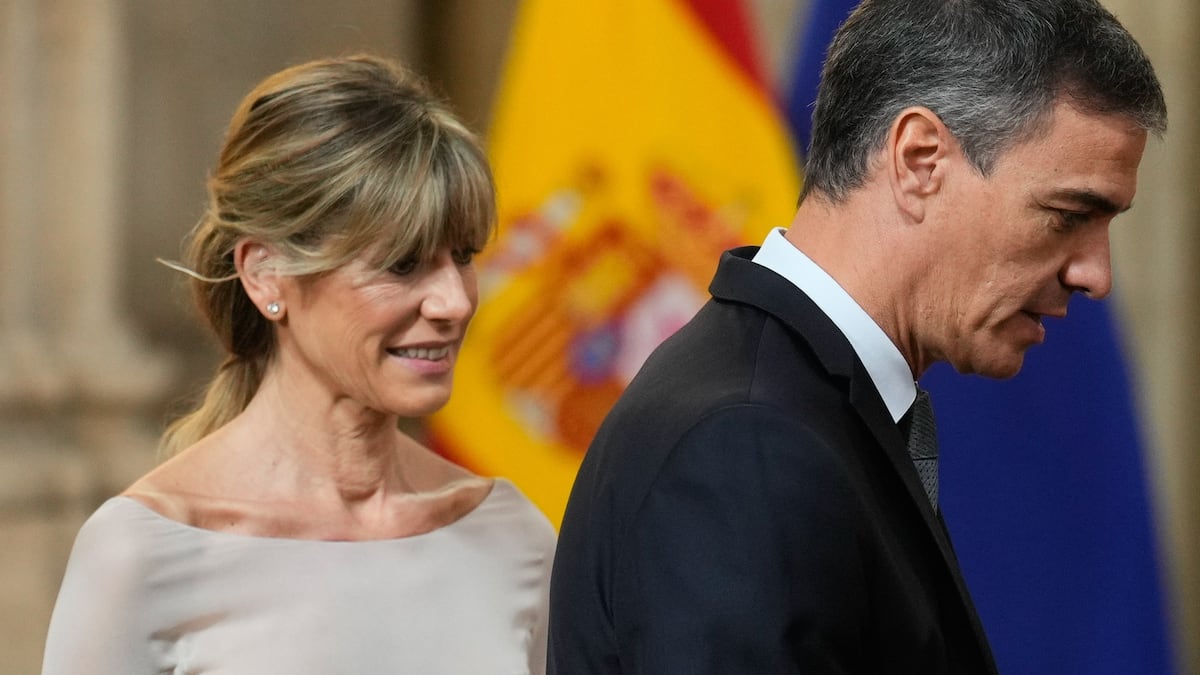
What Comes Next?
As the story continues to develop, several scenarios are possible.
If the claims are substantiated, the implications could be significant, potentially affecting political dynamics and public perception in lasting ways.
If they are disproven or lack sufficient evidence, the focus may shift to questions of journalistic responsibility and the consequences of premature or exaggerated reporting.
In either case, the episode is likely to remain a point of reference in discussions about media ethics and political accountability.
Conclusion: The Power—and Peril—of a “Bombshell”
The phrase “suelta la bomba” captures the drama of the moment, but it also highlights a broader الحقيقة about modern media: the power to shape narratives is immense, and the responsibility that comes with it is equally significant.
For Javier García Isac Castillón, Begoña Gómez, and Pedro Sánchez, this episode represents more than a fleeting controversy. It is a test of credibility, resilience, and the ability to navigate a landscape in which information moves faster than ever before.
As audiences watch, react, and debate, one thing remains clear: in today’s interconnected world, a single statement can reverberate far beyond its original context—shaping perceptions, influencing decisions, and, in some cases, altering the course of public discourse itself.
News

CAYETANA desangra a SÁNCHEZ con ALFONSO ROJO: “Vanidoso útil”
En una de las confrontaciones políticas más intensas de los últimos años, Cayetana Álvarez de Toledo ha vuelto a poner…
El Ayuntamiento de Sestao adeuda más de un millón de euros a una empresa
Sestao (Bizkaia) — La gestión económica de los gobiernos locales —especialmente de los ayuntamientos más pequeños— suele examinarse de cerca…

ASÍ LLORABAN MARES DE LÁGRIMAS en TVE por las DENUNCIAS RECIBIDAS
La defensora del espectador: el barómetro de las quejas emocionales Durante décadas, el rol de la Defensora del Espectador de…

¡ERRORES QUE BLOQUEAN TU ORACIÓN! – PRIÈRES INSPIRÉES – AURÉLIE TCHATCHOU
En el corazón de toda vida espiritual hay un acto que los creyentes consideran esencial: la oración. Ya sea en…

¡HE DENUNCIADO! A ALBERT DOMÈNECH POR ALGO MUY GRAVE
Durante décadas, Domènech se había movido con aparente tranquilidad entre los mundos de la cultura, la docencia y los eventos…

SE LÍA EN DIRECTO! RO FLORES EXPLOTA Y FULMINA GRAVEMENTE POR EMMA GARCÍA POR NAGORE ROBLES
Lo sucedido no es un hecho aislado, sino el punto más visible de un conflicto mediático que arrastra tensiones familiares,…
End of content
No more pages to load