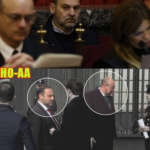
In the age of viral media and hyper-accelerated news cycles, few institutions are as vulnerable to sudden waves of scrutiny as modern monarchies. This week, Spain’s royal household found itself at the center of a digital storm after the circulation of a so-called “grave video” allegedly capturing a tense and uncomfortable moment involving Queen Letizia, Queen Sofía, and Juan Carlos I at the Palacio de la Zarzuela.
While the authenticity, context, and interpretation of the footage remain hotly debated, the reaction has been swift, polarized, and revealing—not only of public sentiment toward the Spanish monarchy but also of the evolving dynamics within the royal family itself.
The Viral Clip That Sparked Outrage
The controversy began when a short video clip, widely shared across social media platforms, appeared to show a visibly tense exchange during what was presumed to be a private or semi-private gathering at Zarzuela Palace. The footage—grainy, partially obstructed, and lacking clear audio—nonetheless ignited a firestorm of speculation.
Online commentators quickly seized on the imagery, claiming that Queen Letizia appeared to be at the center of criticism or confrontation. Others pointed to the demeanor of Queen Sofía, who, in the clip, seemed unusually withdrawn, prompting descriptions of her as “pálida” (pale) and emotionally affected.
Within hours, hashtags referencing the royal family began trending in Spain, with users dissecting every frame of the video and offering competing narratives about what had actually transpired.
A History of Tension Beneath the Surface
To understand why the video resonated so strongly, it is necessary to consider the broader context of the Spanish monarchy’s recent history.
Queen Letizia, a former journalist who married into the royal family, has long been viewed as a modernizing force within the institution. Her approach—characterized by professionalism, discipline, and a more contemporary public image—has earned both admiration and criticism.
In contrast, Queen Sofía represents continuity with an earlier era, one defined by tradition, discretion, and a more reserved public role. The generational and stylistic differences between the two women have occasionally fueled media speculation about underlying tensions.
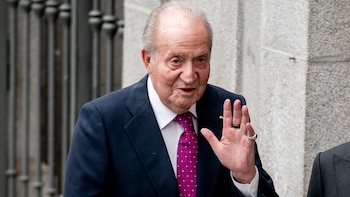
Meanwhile, the presence of Juan Carlos I—once celebrated for his role in Spain’s democratic transition but later embroiled in financial and ethical controversies—adds another layer of complexity. His relationship with the rest of the royal family has been the subject of intense public scrutiny, particularly following his self-imposed exile and subsequent limited returns to Spain.
Interpreting the Images
Experts in media analysis caution against drawing definitive conclusions from the video.
“The human brain is wired to construct narratives from incomplete information,” said one communications analyst familiar with royal coverage. “When you have a silent, ambiguous clip, people will project their assumptions onto it.”
Indeed, the lack of audio has allowed multiple, often contradictory interpretations to flourish. Some viewers claim the footage shows a direct confrontation involving Queen Letizia, while others argue that the apparent tension is being exaggerated or taken out of context.
Body language specialists have weighed in as well, noting that factors such as lighting, camera angle, and timing can significantly distort perceptions of emotion and intent.
The Role of Social Media Amplification
The rapid spread of the video underscores the transformative impact of social media on public discourse.
Platforms that prioritize engagement often amplify emotionally charged content, regardless of its accuracy or completeness. In this environment, a short, ambiguous clip can quickly take on a life of its own, detached from its original context.
For the Spanish royal household, this presents a unique challenge. Unlike political figures, who may respond directly and frequently to media narratives, royal institutions typically rely on measured, infrequent communication. This asymmetry can allow speculation to fill the void.
In the case of the Zarzuela video, the absence of an immediate official response has only fueled further debate.
Public Reaction: Division and Debate
Public reaction to the footage has been deeply divided.
Supporters of Queen Letizia have dismissed the controversy as a baseless attack, arguing that she is being unfairly targeted due to her outsider status within the royal family. They point to her track record of public service and her role in modernizing the monarchy as evidence of her commitment.
Critics, however, have interpreted the video as confirmation of long-standing concerns about internal discord. For them, the clip aligns with a broader narrative of tension between tradition and change within the institution.
Queen Sofía, for her part, has attracted widespread sympathy. Her perceived vulnerability in the video has resonated with many Spaniards, particularly those who view her as a stabilizing figure during turbulent times.
The Shadow of Juan Carlos I
Any discussion of the Spanish monarchy in recent years inevitably returns to Juan Carlos I.
Once a symbol of national unity, the former king’s reputation has been significantly damaged by a series of scandals. His presence at Zarzuela—whether in the video or in broader royal life—continues to evoke mixed reactions.
For some, his reappearance represents a lingering connection to a controversial past. For others, it is a reminder of his historical contributions and a call for a more nuanced assessment of his legacy.
In the context of the viral video, his involvement—real or perceived—adds an additional layer of intrigue and tension.
Institutional Silence and Strategic Restraint
As the controversy has unfolded, the Spanish royal household has maintained its customary silence.
This approach reflects a long-standing strategy: to avoid amplifying विवाद by engaging directly with speculative or unverified claims. However, in the current media environment, such restraint can be a double-edged sword.
On one hand, it preserves the dignity and neutrality of the institution. On the other, it risks allowing narratives—accurate or not—to gain traction unchecked.
Communications experts suggest that modern monarchies may need to adapt their strategies to better navigate the realities of digital media, balancing tradition with responsiveness.
The Broader Implications for the Monarchy
Beyond the immediate controversy, the episode raises important questions about the future of the Spanish monarchy.
Can the institution maintain its relevance and credibility in an era defined by transparency and instant communication? How can it reconcile internal differences while presenting a unified public image? And what role should figures like Juan Carlos I play in its evolving narrative?
Queen Letizia, as a central figure in these discussions, embodies many of these tensions. Her efforts to modernize the monarchy have brought both progress and scrutiny, highlighting the challenges of navigating change within a deeply traditional المؤسسة.
Media Responsibility and Ethical Considerations
The coverage of the Zarzuela video also raises broader questions about media responsibility.
To what extent should journalists amplify unverified or ambiguous content? How can they balance the public’s right to know with the need to avoid misinformation?
These questions are particularly salient in cases involving private individuals—even those in public roles—where the line between legitimate scrutiny and invasive speculation can be difficult to draw.
Responsible reporting requires not only accuracy but also context, nuance, and restraint—qualities that can be difficult to maintain in a competitive media landscape.
A Moment of Reflection
As the initial wave of reaction begins to subside, there is an opportunity for reflection.
The viral video, regardless of its ultimate significance, serves as a reminder of the power of images—and the dangers of interpreting them without sufficient context.
It also highlights the enduring fascination with royal families, whose personal dynamics often become proxies for broader societal debates about tradition, change, and identity.
Conclusion: Beyond the Headlines
The story of the “grave video” at Zarzuela is, in many ways, a story about perception.
What viewers believe they saw—and what they choose to believe it means—says as much about contemporary society as it does about the individuals involved.
For Queen Letizia, Queen Sofía, and Juan Carlos I, the episode represents another chapter in an արդեն complex and closely watched narrative.
For the Spanish monarchy, it is a test of resilience in the face of modern الإعلام dynamics.
And for the public, it is a reminder to approach viral moments with a critical eye, recognizing that the truth is often more nuanced than the headlines suggest.
As the dust settles, one thing is clear: in the digital age, even the most private moments can become public spectacles—and their impact can extend far beyond the palace walls.
News
Rufián y Montero en Barcelona: su “brillante” estrategia para que la izquierda gane elecciones
En el siempre cambiante tablero político español, Barcelona vuelve a situarse como un escenario clave donde se ensayan discursos, estrategias…
Jano García: “El destrozo está siendo espectacular” — análisis de una declaración que incendia el debate mediático
En un momento de máxima polarización informativa en España, las palabras del comunicador Jano García han vuelto a situarse en…
¡SE HA LIADO FUERTE! Belén Esteban contra Jorge Javier Vázquez y el debate que salpica a Carlota Corredera por Kiko Rivera
El universo del entretenimiento televisivo español vuelve a entrar en ebullición tras una nueva oleada de tensiones, comentarios cruzados y…
Es Noticia: Ábalos abatido — una sesión explosiva en el Tribunal Supremo sacude el panorama político
La jornada en el Tribunal Supremo de España ha dejado una de las escenas más tensas de los últimos tiempos…
EL SUPUESTO “PRIVILEGIO ESCANDALOSO” DE TORRES Y ARMENGOL EN EL SUPREMO: ENTRE ACUSACIONES POLÍTICAS, INTERPRETACIONES Y FALTA DE CONFIRMACIONES
En los últimos días, una nueva controversia ha irrumpido en el debate político español tras la difusión de informaciones y…
¡TERRIBLE VARAPALO! Rocío Carrasco tiembla ante el movimiento de Antonio David Flores por la herencia vinculada a Gloria Camila
En el siempre intenso y cambiante universo de la crónica social española, hay historias que nunca terminan de cerrarse. Algunas…
End of content
No more pages to load