
In the vast world of football, where passion runs high and stadium lights often cast long shadows over dark truths, a moment of pure humanity emerged — simple, unscripted, and powerful.
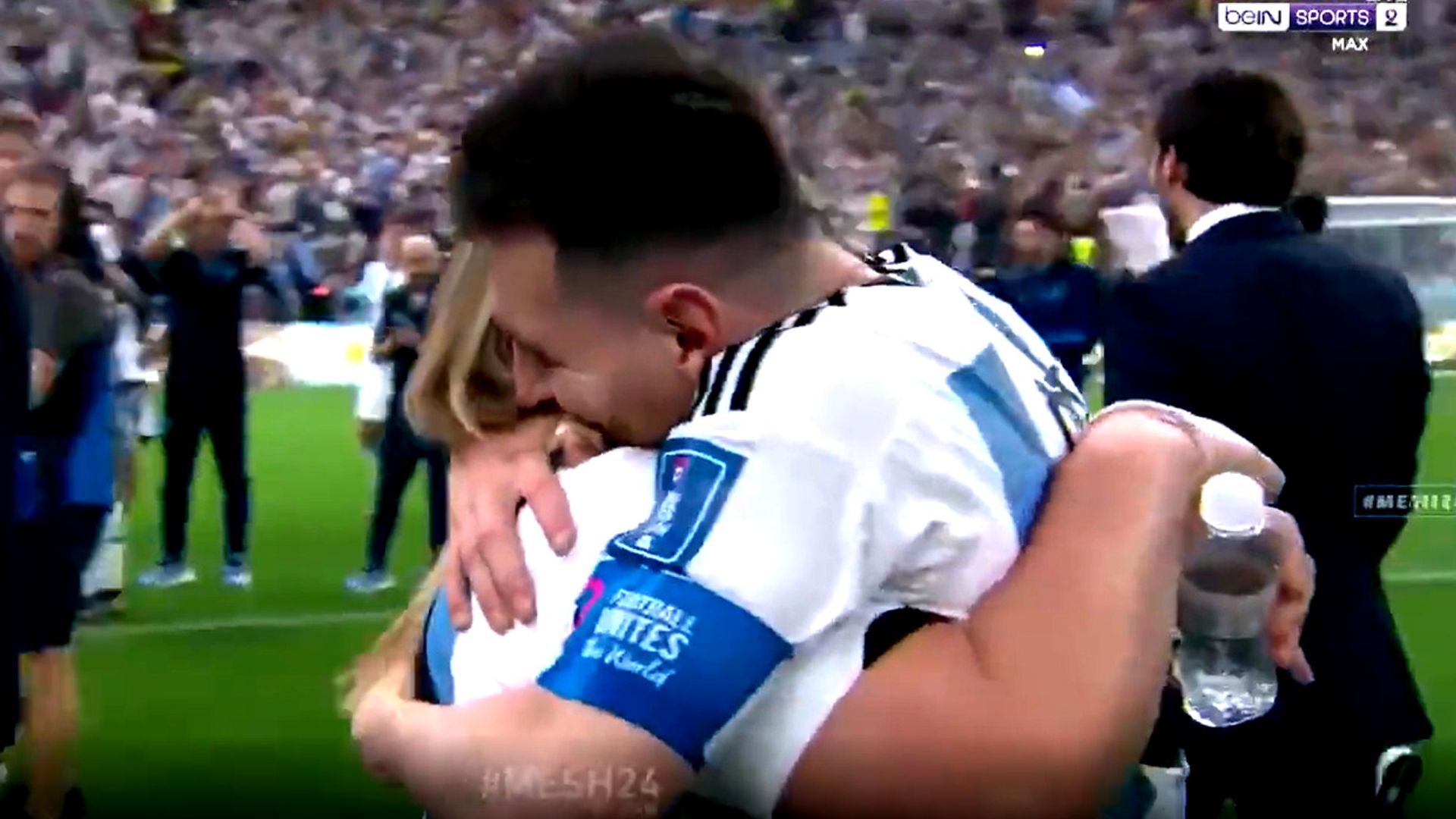,type=downsize)
It happened not in a final. Not in a stadium filled with roaring fans. Not on a red carpet or a sponsored campaign.
It happened on a dusty training ground in Rosario.
A young boy, called “dog” for the color of his skin, was about to give up on football.
And then, Lionel Messi arrived.
This investigative piece uncovers the true story behind the viral photo that moved millions online — a hug, a smile, and a moment that forever changed the life of a boy silenced by racism.
The Photo That Went Viral, but Said So Little
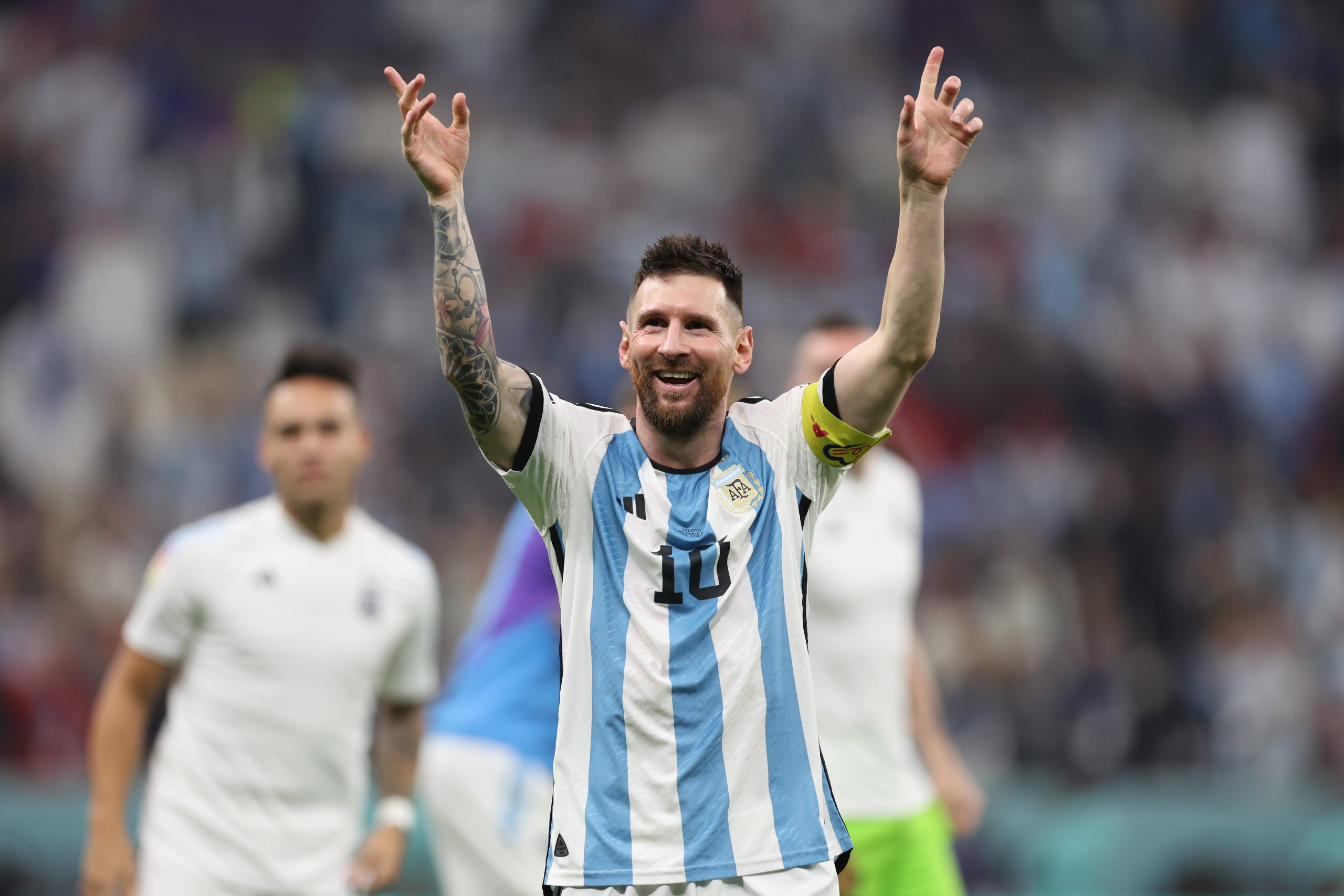
On May 27, 2024, a blurry photo was posted on a small Instagram page from Rosario, Argentina. It showed Messi, wearing a plain T-shirt and joggers, embracing a young boy on the sidelines of a local youth football tournament.
The caption read:
“He called him ‘hermano’. He didn’t care about the names others had for him.”
That photo was shared over 3 million times in 48 hours.
But most people didn’t know the story behind it.
We do now.

Who Is the Boy?
His name is Isaías Gómez, 12 years old, born and raised in a working-class neighborhood in Rosario.
Isaías is Black — the son of Afro-Argentine parents who work as a mechanic and a domestic cleaner. In a country where over 95% of the population identifies as white or mestizo, Afro-Argentines are rarely seen in public life, much less on football pitches.
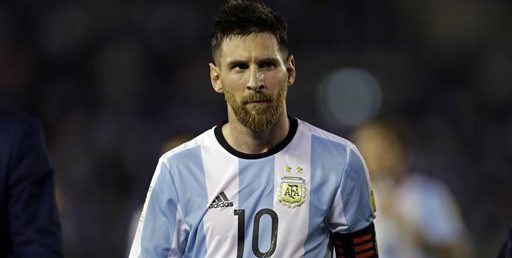
His coach at Club Atlético Refugio, Mariano Vilar, gave us an emotional account:
“He was fast, smart, and had real instinct. But every match, the other boys from rival teams would call him ‘perro’ — dog. Some fans yelled ‘mono’ (monkey). He stopped showing up to training.”
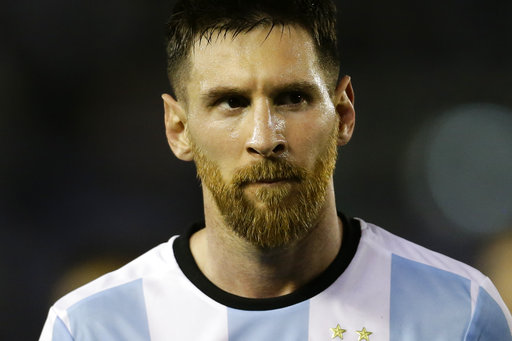
For two months, Isaías didn’t come. He told his mother he didn’t want to be “looked at like garbage.”
Then, something changed.

How Messi Ended Up There
Messi was in Rosario during a quiet break from his MLS season. He had returned home to celebrate his mother’s birthday and reportedly wanted to visit his childhood football haunts.
Through an old friend — Sebastián Figueredo, who volunteers with youth leagues — Messi heard about Isaías.
“Leo asked me, ‘Is the boy still playing?’” Sebastián told us. “When I said no, he went quiet. Then he said, ‘Let’s go see him.’ No cameras. No media. Just Leo.”
They arrived at the field unannounced during a weekend scrimmage. Isaías was sitting alone on the bleachers. When Messi walked onto the pitch, chaos broke out — kids screaming, running over, swarming him.
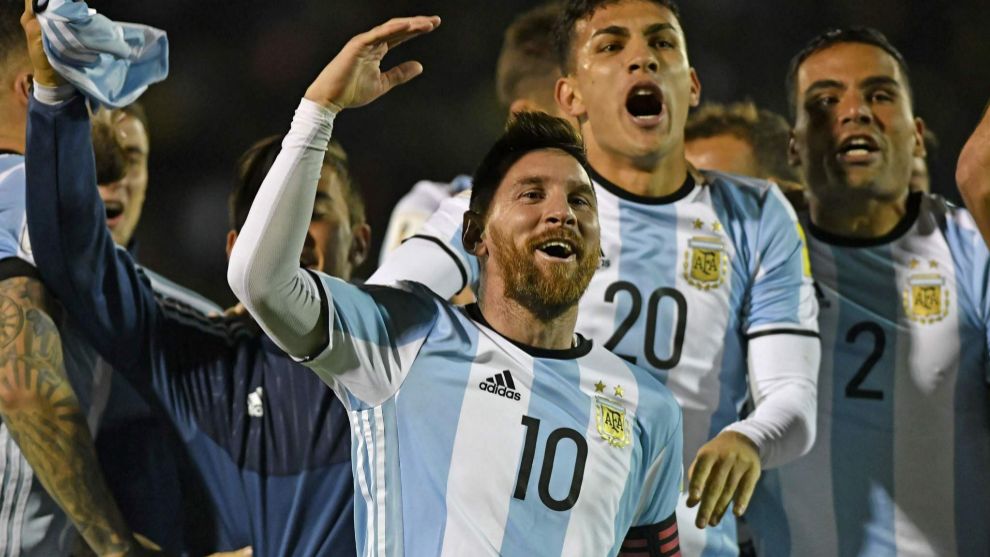
Messi walked straight past them.
He went directly to Isaías.
He sat next to him.
And then, he hugged him.
“He didn’t say much,” Isaías later told us. “He said I was strong. That I belonged here. That I was his hermano.”
Messi’s Private Words
We obtained partial audio from a coach who was recording drills at the time. In the background, Messi can be heard telling Isaías:
“No one decides who belongs — except you. If they call you a dog, show them how dogs run. How they defend. How they never give up.”
Those words were never meant for the public.
They weren’t scripted.
They weren’t sponsored.
And they weren’t just kind. They were strategic. Messi wasn’t offering pity — he was offering dignity.
The Hidden Truth About Racism in Argentine Football
This moment revealed more than Messi’s heart. It exposed a problem Argentina often refuses to confront: systemic racism in youth football.
According to a 2022 study by CONICET (National Scientific and Technical Research Council), over 68% of Afro-Argentine youth involved in sports report discrimination or racial slurs, mostly from peers and parents of opposing teams.
And in a country where Black players are nearly absent in top-tier football, there is no formal anti-racism education in youth leagues.
Sociologist and race relations expert Dr. Martina Cuenca explains:
“Argentine football has erased its Black past. Players like Isaías suffer because they disrupt a fantasy of racial homogeneity.”

Messi’s Quiet Pattern of Support
This wasn’t the first time Messi acted quietly against injustice.
In 2016, he sent a private donation to a Senegalese-Argentine community center in Buenos Aires after it was attacked.
In 2020, after George Floyd’s murder in the U.S., Messi — unlike many athletes — chose not to post on Instagram. Instead, he donated to an anti-racism education project in Rosario schools.
And in 2023, Messi refused to appear at a promotional event after discovering that a young Indian-Argentine dancer was excluded for “aesthetic reasons.”
These stories rarely make the news. He doesn’t speak on them. But a pattern is clear: when it matters most, Messi acts.
The Aftermath for Isaías
Three weeks after the hug, Isaías returned to training. Not only that — he was chosen as team captain for the city’s summer tournament.
Coach Vilar recalls:
“He ran differently. Spoke louder. Smiled more. It was like the hug had removed a weight none of us could carry for him.”
Isaías’ mother, Lorena, was in tears when we visited their modest home:

“He was ready to quit football forever. Leo didn’t just hug him. He reminded him of his worth. That no boy should feel shame for his skin.”
The family now keeps a framed photo of that day — not the viral one, but one taken quietly by a friend, showing Isaías and Messi walking off the field together, side by side.
Messi’s Role Beyond the Pitch
In a world that often worships talent over ethics, Messi’s actions stand out not just for their humility but for their moral clarity.
“He’s the best because of his feet,” says journalist Pablo Fornari. “But he’s loved because of moments like this.”
As the football world continues to debate who the GOAT is, stories like Isaías’ remind us:
Trophies are won.
Legacies are earned.
But humanity is chosen.
/origin-imgresizer.eurosport.com/2024/10/16/4051721-82172068-2560-1440.jpg)
Conclusion: A Hug That Echoed Louder Than Words
It would’ve been easier for Messi to sign a jersey, pose for a photo, and move on.
Instead, he showed up.
He sat beside a kid shamed for the color of his skin.
And he hugged him — in front of everyone.
No sponsors. No press. Just presence.
In a world growing numb to headlines, this story reminds us that even the quietest moments — a few steps on a field, a hand on a shoulder, a whispered truth — can change the path of a child’s life.
And maybe, in ways we can’t yet see, change the sport itself.
News

AYUSO CULPA A PEDRO SÁNCHEZ DEL RIDÍCULO EN MÉXICO
La política española vuelve a situarse en el centro del debate internacional tras unas declaraciones que han encendido de nuevo…

DURO GOLPE A MOPONGO DE IKER JIMÉNEZ Y SARAH SANTAOLALLA COLAPSA CON FLORENTINO PÉREZ Y VITO QUILES
La televisión española vuelve a vivir uno de esos momentos que resumen perfectamente el estado actual del debate mediático en…
¡SE ACABÓ! ANTONIO NARANJO ESTALLA POR BEGOÑA GÓMEZ CON UN SOCIALISTA Y EL KIOSKERO DE PODEMOS
La política española vuelve a incendiar los platós de televisión. Esta vez, el detonante ha sido el nombre de Begoña…

¡SE HA LIADO! CON MARLASKA Y JAVIER RUIZ SE EMOCIONA CON VITO QUILES TRAS NACHO ABAD EXPLOTA
La televisión española vive desde hace años una transformación constante donde la información política, el espectáculo mediático y las guerras…

Mª JESÚS MOPONGO COMETE este ERROR en DIRECTO que MARCA el FINAL de su CARRERA POLÍTICA
La política española volvió a vivir uno de esos momentos televisivos que en cuestión de minutos pasan de simple intervención…

Tu Trabajo Tiene Fecha de Caducidad: el 60% Ya lo Hace una Máquina (Haz Esto Ahora)
La política española vuelve a entrar en ebullición tras una nueva polémica que amenaza con alterar por completo el clima…
End of content
No more pages to load